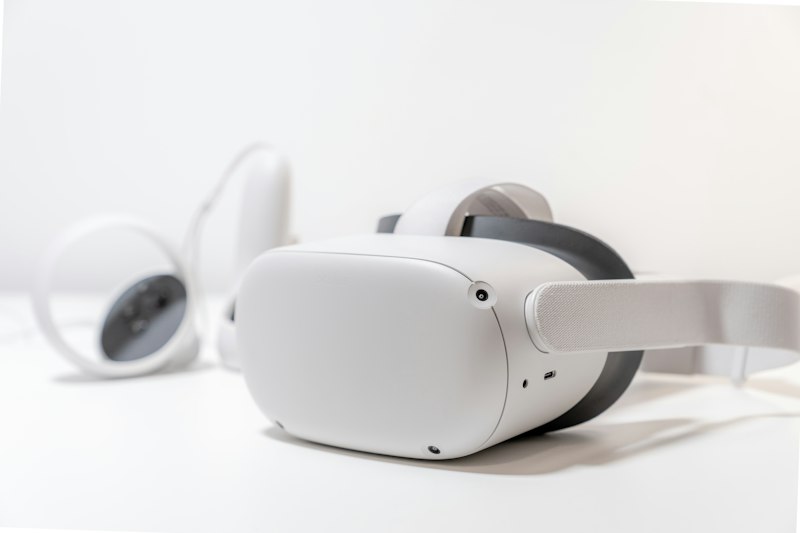
Apple's Vision Pro 2 represents a significant refinement of the spatial computing concept the company introduced in 2024. The second generation device is lighter, more comfortable, and substantially more capable than its predecessor, addressing the most significant criticisms of the original while introducing new capabilities that hint at the long-term vision for the platform.
Hardware Improvements
The most immediately noticeable change is the weight reduction. At 550 grams, the Vision Pro 2 is 28% lighter than the original, achieved through a new carbon fiber chassis and a redesigned optical system that uses fewer, more efficient components. The battery, now integrated into the headset rather than tethered externally, provides 3.5 hours of mixed use — still not sufficient for a full workday, but a meaningful improvement.
The display system has been upgraded to micro-OLED panels with 4K resolution per eye, compared to the original's 3.4K. The improvement in pixel density is perceptible in text rendering, which now approaches the clarity of a high-quality physical display. The field of view has been expanded by approximately 15%, reducing the "porthole" sensation that some users found disorienting in the original.
The M4 Ultra Chip
The Vision Pro 2 is powered by the M4 Ultra chip, a configuration that provides roughly 2.5x the computational performance of the M2 chip in the original device. The practical impact is most visible in demanding applications: real-time 3D rendering, complex spatial audio processing, and the simultaneous execution of multiple high-resolution video streams all feel noticeably smoother.
The additional compute headroom also enables more sophisticated eye-tracking and hand-tracking algorithms, which translate to improved input accuracy and reduced latency. The difference is particularly noticeable in precision tasks like text selection and UI manipulation.
The Software Ecosystem
visionOS 3 ships with the Vision Pro 2 and brings significant improvements to the platform's core experiences. The spatial browser now renders web content with better fidelity and supports a wider range of web technologies. The productivity suite has been enhanced with better integration between spatial windows and traditional document workflows.
The app ecosystem has grown substantially since the original launch, with several major productivity applications now offering purpose-built spatial interfaces rather than simply scaling up their iPad versions. Microsoft Office, Adobe Creative Cloud, and several specialized professional tools have invested in spatial-native experiences that take genuine advantage of the form factor.
The Verdict
The Vision Pro 2 is the best spatial computing device available, but that assessment must be contextualized. At $2,499, it remains a premium product accessible to a limited audience. The use cases that genuinely benefit from spatial computing — immersive collaboration, 3D design review, entertainment, and certain specialized professional applications — are compelling but not yet universal.
For early adopters, creative professionals, and businesses with specific spatial computing use cases, the Vision Pro 2 is a worthy investment. For the mainstream consumer, the value proposition remains a work in progress.
Yuki Tanaka
Technology Correspondent
Senior journalist covering technology topics with over a decade of experience in investigative reporting and analysis.
Share this article
Stay Informed
Get the best stories from Finance, Health, Tech, News & Entertainment delivered weekly.
No spam. Unsubscribe anytime.